The Sound of One Hand Clapping: A Hall of Shame for Award Show Moments That Died Onstage and Took the Audience With Them
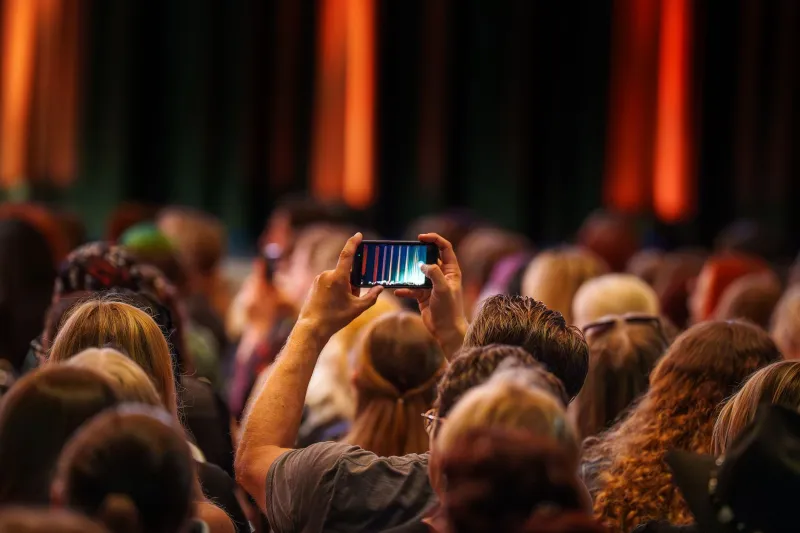
Award shows are, at their core, a beautiful lie. The premise goes: talented people gather in a room full of other talented people, everyone wears something that costs more than your car, and the whole thing gets beamed into living rooms across America where normal humans watch with a mixture of awe, resentment, and ranch dip on their fingers. It is supposed to be glamorous. Aspirational. A celebration of human creativity.
And then someone walks up to a microphone and the whole thing curdles like warm milk in a limousine.
We are talking, of course, about The Moment. You know The Moment. The joke that lands like a wet sock. The speech that starts confident and ends with a publicist quietly updating their resume. The musical performance where the audience isn't sure if they should clap or call someone. Award shows have been manufacturing these disasters since the first Oscar ceremony, and America — bless its chaotic, popcorn-munching heart — has never once looked away.
Here, for your reading pleasure and mild psychological damage, is an appreciation of the most gloriously catastrophic award show moments when the crowd simply did not get the memo.
The Joke That Fell Into a Canyon
Every few years, a host — usually someone who is very funny in literally every other context — walks out to a room full of millionaires and discovers, in real time, that comedy requires an audience willing to participate in the joke. When that audience is composed of people who are simultaneously terrified of being caught on camera laughing at the wrong thing, you get what can only be described as a comedic black hole.
The tell is always the same: the punchline lands, there is a half-second of genuine silence, and then — like a car engine turning over in January — a smattering of polite applause starts somewhere in the back third of the room. The host's face does something complicated. They nod once, twice, three times, the way a person nods when they are mentally composing a strongly worded email to their agent.
The cameras, mercifully and also cruelly, always cut to the exact celebrity the joke was about. That celebrity is doing the face. Everyone knows the face. It is the expression of someone who has decided, in this precise moment, that laughing would be political and not laughing would also be political, so they have chosen a third option: becoming briefly transparent.
The Speech That Forgot to End
If the bombed joke is a car crash, the speech that won't die is a car crash that somehow keeps going for another forty-five minutes down a highway that shouldn't exist.
The architecture of a catastrophic acceptance speech follows a reliable blueprint. It begins with gratitude — genuine, lovely, completely fine. Then it takes a turn. Maybe the winner decides this is the moment to workshop some opinions about geopolitics. Maybe they start listing names — so many names — and the orchestra begins playing them off, and they talk over the orchestra, and now it's a standoff, and nobody wins, least of all the nine million viewers who were hoping to catch the Best Picture announcement before midnight.
The audience at these events is a masterclass in performative engagement. Watch the cutaways. Watch a front-row celebrity go through the five stages of grief in forty-five seconds while maintaining a smile so fixed it looks load-bearing. Watch the person next to them check their phone with the subtlety of a golden retriever trying to sneak a piece of cheese off the counter. The speech continues. The speech always continues.
The Musical Interlude That Asked Too Much of Everyone
Somewhere along the way, award show producers decided that what a three-hour broadcast really needed was an experimental performance piece that nobody in the room — or the viewing audience — had the context to understand. The performer is committed. The performer is deeply committed. There are dancers in conceptual costumes. There is a fog machine. There is, at one point, what appears to be interpretive weeping.
The camera sweeps across the audience. A country music legend in the third row has the expression of a man who has been asked to solve a differential equation while someone blows a horn directly into his ear. A pop star in the front row is nodding with tremendous energy in a way that suggests she has absolutely no idea what is happening but has decided enthusiasm is the safest posture. Someone in the balcony is clapping on the wrong beat, alone, heroically, until they notice and stop.
When it ends, the applause is technically present. It is also technically the same sound you'd make if you accidentally walked into the wrong meeting and felt obligated to seem like you belonged.
The Presenter Who Lost the Bit
The two-presenter banter setup is the most dangerous format in live television. It requires chemistry, timing, and the mutual understanding that you are both in on the same joke. When one presenter is in on the joke and the other is reading the teleprompter with the energy of someone who has just been told what a teleprompter is, you get something truly special: a bit that collapses in slow motion while both parties attempt to salvage it using sheer forward momentum and increasingly desperate eye contact.
The audience's job in this scenario is impossible. They want to be supportive. They are trying to be supportive. But the laugh track of their own nervous systems refuses to fire, because what they are watching is not comedy — it is two people trapped in a bit together, like two guys who started a handshake wrong and are now three minutes in and can't find the exit.
The scattered applause at the end is not applause for the joke. It is applause for survival.
Why We Can't Stop Watching
Here is the thing nobody wants to admit about award show disasters: they are the point. Not officially — officially, award shows exist to celebrate achievement and generate content for entertainment journalists. But emotionally, psychologically, in the deepest and most honest part of the American viewing experience, we tune in for the exact possibility that something will go catastrophically sideways.
The silence after a bombed joke is uncomfortable in the way that only live television can produce — a shared, national cringe that bonds strangers across time zones. When a speech runs long, when a bit collapses, when a performer loses the room and the cameras catch a celebrity's face doing something involuntary, we are all, briefly, in the same room together. Horrified. Entertained. Unable to look away.
Award shows are America's most expensive improv class, and the notes are always delivered in real time, on national television, with a global audience taking notes.
We'll be watching. We always are. Ranch dip and all.